


Blog
New York Convention Group Transportation Plans

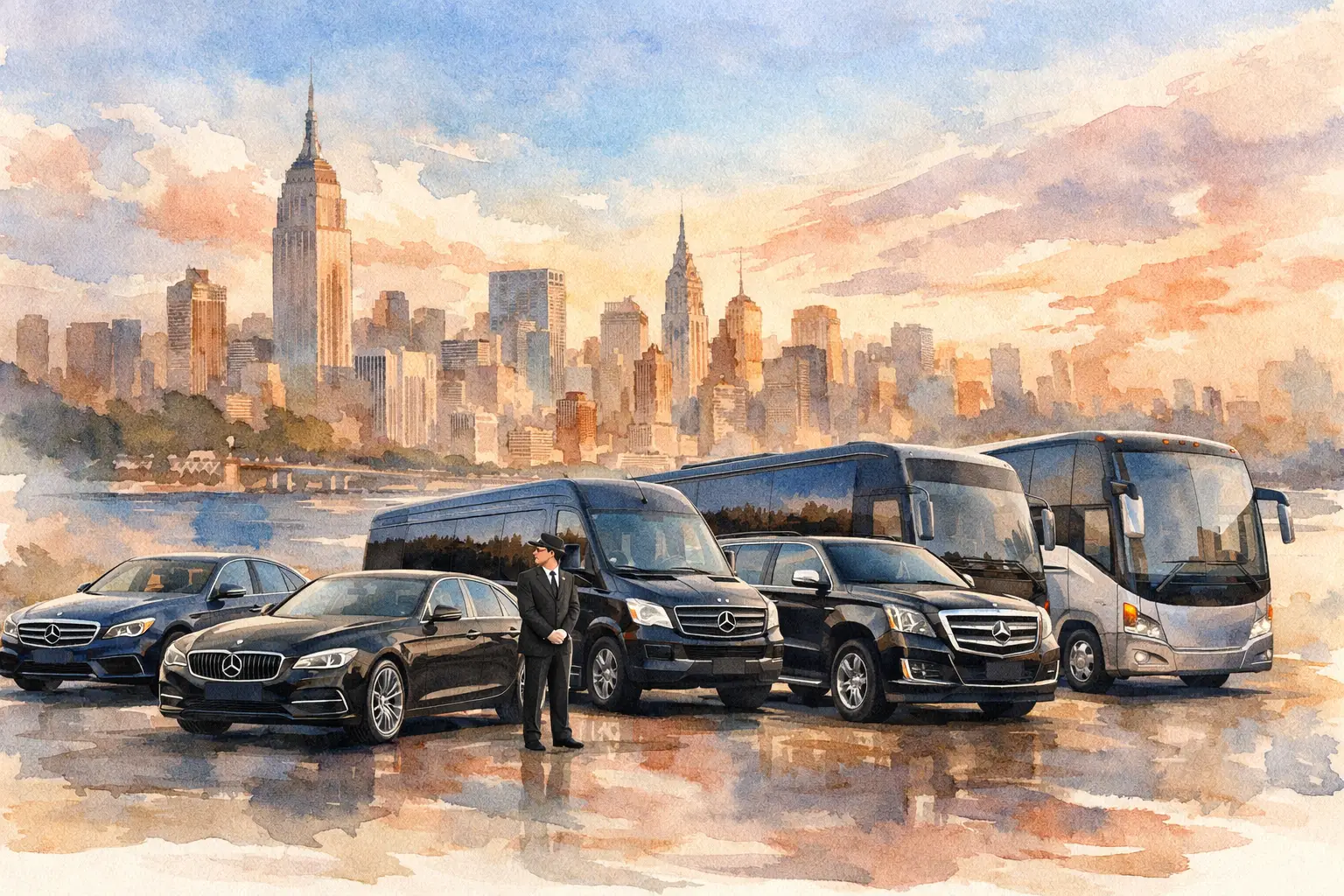
A convention itinerary can look perfectly organized on paper and still unravel at the curb. New York convention group transportation requires more than selecting a vehicle: it means accounting for airport arrivals, hotel entrances, venue loading rules, luggage, changing agendas, and the very real effect of Manhattan traffic. For executive teams, exhibitors, delegates, and invited guests, a clear transportation plan keeps the focus where it belongs – on the event.
Start With the Convention Schedule, Not the Vehicle
The vehicle should fit the movement plan, not the other way around. Before arranging transportation, identify where the group begins, where it must arrive, and whether everyone truly needs to travel together. A 12-person team flying into JFK at different times has different needs than 45 guests leaving a Midtown hotel for an evening reception.
For conventions at the Jacob K. Javits Center, timing is especially important. Morning arrivals often converge around the same few blocks on the Far West Side, while afternoon departures can overlap with attendee pickup, freight activity, and local traffic along Eleventh Avenue. A chauffeur needs a specific pickup point and a realistic window, rather than a vague instruction to meet outside the convention center.
The same principle applies to meetings near Times Square, Hudson Yards, the Financial District, Long Island City, or Brooklyn. Street access, hotel driveways, and building security procedures can change the practical pickup location. A professional transportation provider should confirm these details before the first guest steps outside.
Build New York Convention Group Transportation Around Arrivals
Airport coordination is often the part of a convention plan that creates the most confusion. Attendees may arrive at JFK, LaGuardia, Newark, Teterboro, or even on different days. The most efficient approach is usually to group passengers by arrival period and destination, not simply by company department.
A team landing within 20 to 30 minutes of one another may travel well in a Mercedes-Benz Sprinter Passenger Van van, particularly when everyone has checked luggage. On the other hand, a senior executive arriving alone for a Midtown meeting may need a sedan or SUV, while a delegation with presentation cases may need additional cargo capacity.
Flight timing is only one piece of the plan. International arrivals can take longer to reach the pickup area, late-night arrivals may have a different pace than a weekday morning, and weather can affect road conditions across Queens, Brooklyn, and Manhattan. Build reasonable time between the scheduled landing and the next commitment.
For airport pickups, legal operating authority matters. WTM365 | U.S. Limosystems is licensed by the NYC TLC under #B03334 and permitted by the Port Authority of NY & NJ under Permit #AXA-170 for passenger pickup and drop-off at JFK, LaGuardia, and Newark. That is practical reassurance when coordinating guests who may be unfamiliar with New York airport procedures.
Match the Vehicle to People, Bags, and the Day Ahead
Passenger count alone can be misleading. Convention guests often arrive with garment bags, equipment cases, samples, display materials, or luggage for several nights. A vehicle that fits everyone seated may not be the right choice once cargo is included.
Consider these common arrangements:
- Executive sedans and SUVs suit individual travelers, small leadership teams, and private airport transfers.
- Executive Sprinter vans work well for corporate teams, visiting clients, and smaller delegations traveling with luggage.
- Larger executive shuttles are useful for coordinated hotel-to-venue movements and dinner transfers.
- Motorcoaches fit larger attendee groups, especially when a single departure time is realistic and venue access has been confirmed.
There is a trade-off with larger vehicles. They reduce the number of departures, but they need more room to stage and may require a pickup location a block or two from a congested entrance. For some Midtown hotels, two Sprinter vans on staggered schedules are more practical than one large coach.
Plan the Hotel-to-Venue Run Carefully
The shortest route is not always the most dependable route during a convention. Morning traffic near Hudson Yards, Midtown East, and Times Square can shift quickly with weather, construction, street activity, and major events. A 15-minute drive in light traffic can require substantially more time during the weekday rush.
For a group staying at a hotel near Grand Central, the Javits Center is close in distance but not always quick by road. For guests in Long Island City, access through the Queens Midtown Tunnel may make sense at one hour and be less appealing at another. The right plan comes from reviewing the actual schedule, not relying on a map estimate.
Give attendees a firm boarding time that is earlier than the venue arrival time. If badges, security screening, registration, or a keynote are scheduled for 9:00 a.m., the transportation plan should account for the walk from the drop-off point and time spent entering the building. A group that arrives at the curb at 9:00 is already behind schedule.
Clear communication helps prevent the familiar last-minute call from a guest who is still in the elevator. Share the pickup address, the exact lobby or entrance, the boarding time, a group contact, and the destination. For larger groups, designate one on-site coordinator who can confirm the final headcount with the chauffeur before departure.
Keep Evening Events Flexible
Convention dinners, client receptions, and private events rarely end at the exact minute printed on an agenda. A panel runs long, an important conversation continues, or guests leave in smaller groups than expected. Transportation after an event should reflect that reality.
A single return departure is efficient when the group has a firm program end. For a networking event in Tribeca or a dinner in the Flatiron District, staggered return options may be more comfortable for guests and easier for the host to manage. The appropriate approach depends on the event format, group size, and whether attendees are expected to remain together.
If the convention includes a Long Island or Hamptons component, allow considerably more time. A post-event trip from Manhattan to Garden City, Melville, or Huntington is different from a summer Friday movement to Southampton, Bridgehampton, Sag Harbor, or East Hampton. Seasonal demand and eastbound traffic can shape the entire schedule.
For wedding-related groups, sponsor retreats, or hosted events farther east, Hampton Van Service can provide a more sensible option than asking guests to coordinate separate rides after a long day. The goal is not to fill every seat. It is to give guests a comfortable, organized way to reach the next part of the program.
Have a Plan for Changes Without
Over complicating
It
Convention schedules change. A flight is delayed, a speaker is added, or a client requests a ride from the venue directly to JFK. The most useful transportation plans leave room for these normal adjustments while keeping the core schedule easy to understand.
Provide the transportation coordinator with passenger names, mobile numbers when appropriate, flight details for airport arrivals, and a day-of contact. If attendees are arriving at JFK for a Manhattan convention, a dedicated JFK Van Service plan can coordinate shared arrivals while allowing separate service for executives whose schedules do not align.
It also helps to identify the decisions that need approval in advance. Can a vehicle wait if a meeting runs late? Should late-arriving guests be sent directly to the venue rather than the hotel? Who can authorize an additional pickup? Resolving those questions before the event avoids confusion when time is limited.
Reliable Transportation Is Part of the Guest Experience
A convention host may spend months arranging speakers, meeting rooms, and dinners, yet transportation is often the first direct experience a guest has with the event. A clean vehicle, a professionally dressed chauffeur, a confirmed pickup point, and sensible timing set a calm, respectful tone.
With more than 25 years serving New York City, Long Island, and the Hamptons, WTM365 understands that group transportation is ultimately about coordination, not just capacity. When the agenda is taking shape, reserve transportation early enough to confirm the right vehicle mix, venue access, and airport plan for every important arrival.
