

Bayville to JFK Car Service & Airport Transfers | WTM365
Plan a reliable Bayville, NY to JFK Airport car and van service with practical timing, vehicle, luggage, and pickup guidance for Long Island travelers.
 Skip to main content

A roadshow can lose momentum before the first presentation begins. Executive roadshows in New York often involve airport arrivals, Midtown meetings, client offices on Long Island, and tight windows between each stop. The transportation plan must account for people, luggage, traffic patterns, building access, and the reality that one delayed departure can affect the entire day.
For senior teams, investors, visiting clients, and corporate hosts, a chauffeured itinerary should feel calm even when the schedule is demanding. That requires more than assigning a vehicle for each leg. It requires a route plan built around the day’s actual locations and priorities.
A standard airport transfer has one origin and one destination. A roadshow may have six stops, several passengers joining at different times, presentation materials, and a final departure from a different location. The executive team needs privacy, a comfortable working environment, and clear communication without being distracted by the logistics.
New York adds another layer. A morning meeting in Hudson Yards, a lunch in Midtown East, and an afternoon visit in Long Island City may look close on a map. In practice, loading zones, security desks, bridge traffic, and the timing of each departure all matter. The same is true when a Manhattan program extends to Garden City, Melville, Hauppauge, or a summer client meeting in Southampton.
The right vehicle also depends on the group. A Mercedes-Benz S-Class or premium SUV may suit a small executive party. A Mercedes-Benz Sprinter Executive is often a better fit when several colleagues need to travel together, review materials, and keep the group on one schedule. Splitting a team into separate vehicles can be sensible for larger groups, but it creates more coordination points.
For more on vehicle choice, see how to select executive SUVs for New York travel, our comparison of sedan versus SUV executive travel, and our overview of executive transportation for business travel in NYC.
A strong roadshow schedule starts with meeting times, then works backward. Do not estimate every trip by mileage alone. Manhattan traffic can change significantly between early morning, midday, and the late-afternoon peak. Queens Boulevard, the Long Island Expressway, the Van Wyck Expressway, and the approaches to the East End can all affect a carefully planned day.
Allow time for the parts of the trip that are easy to overlook. Executives may need to collect materials, pass through reception, use elevators, or meet a client in a lobby before entering a conference room. A chauffeur also needs a clear instruction for the pickup point, especially at buildings with restricted curb access.
If the team is arriving through JFK, LaGuardia, Newark, Teterboro, or Westchester, the first transfer sets the tone. Build in time for baggage collection and any difference between the scheduled arrival and the time passengers are ready at the pickup area. For international arrivals at JFK, that window can vary widely. For flights arriving at Newark, the official Newark Liberty International Airport website provides terminal and airport information that can help with arrival planning.
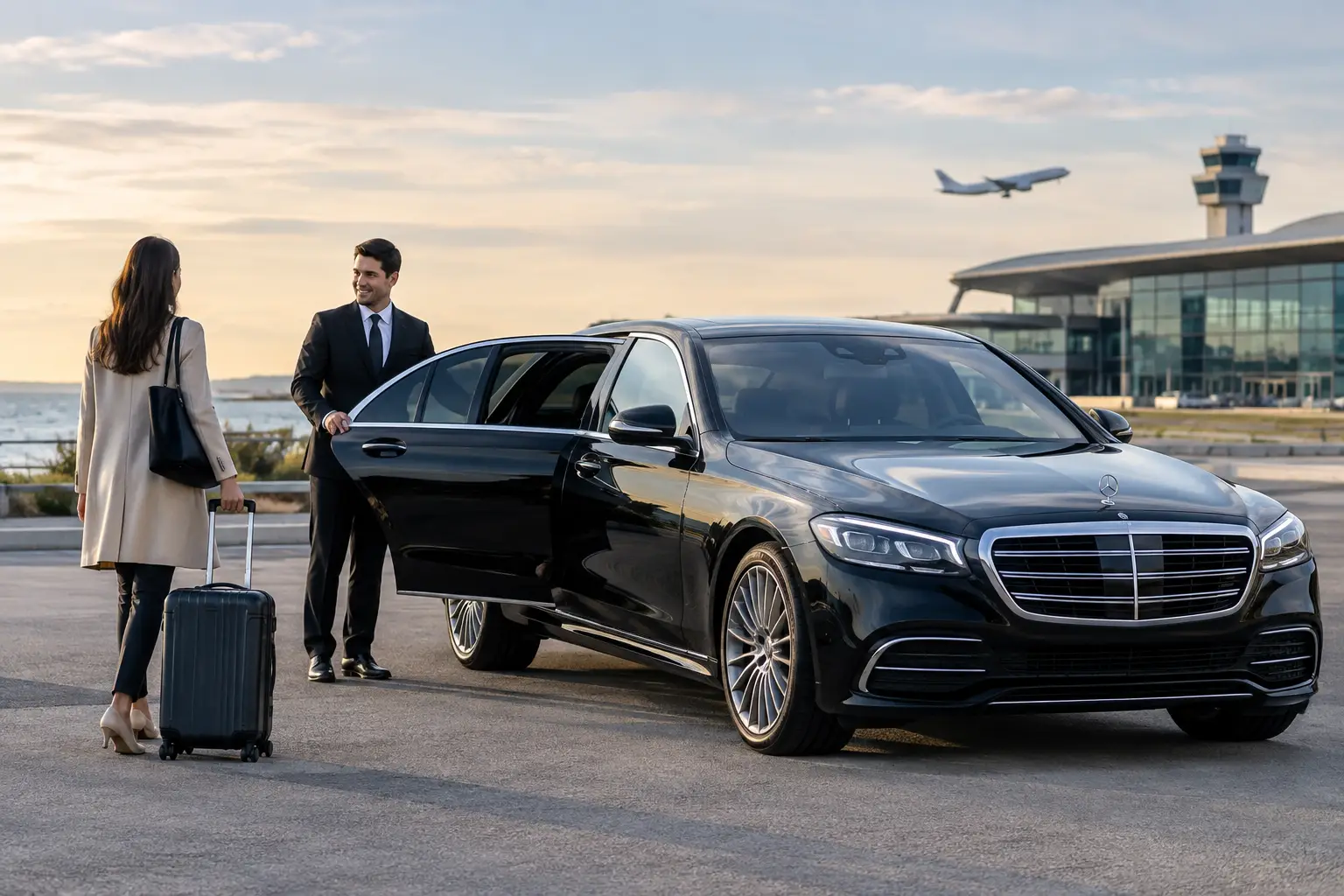
A JFK Van Service arrangement can be especially useful for a group arriving with presentation cases and checked luggage. Rather than improvising after arrival, provide the flight details, passenger count, luggage estimate, and first meeting address before the day begins. A permitted airport operator can then coordinate the appropriate pickup process. WTM365 | U.S. Limosystems is licensed by the NYC TLC under #B03334 and holds Port Authority Permit #AXA-170 for authorized passenger pickup and drop-off at JFK, LaGuardia, and Newark.
When possible, group meetings by area. A day that moves from Midtown West to Midtown East to Lower Manhattan is usually easier to manage than one that crosses Manhattan repeatedly. If a Long Island client visit is essential, place it beside an airport arrival or departure when the schedule allows.
There are exceptions. A key client may only be available at a certain hour, and that meeting should lead the plan. In that case, use the travel time between appointments as an opportunity to prepare, while allowing for interruptions from traffic or schedule changes . An executive vehicle gives the team a private place to make calls, review notes, or prepare for the next room.
Roadshows rarely run exactly to the minute. A meeting may finish early, a presentation may continue, or a client may invite the group to an unplanned walk-through. Your transportation partner should have the full itinerary, primary contacts, and a clear process for schedule updates.
This does not mean a chauffeur can wait indefinitely at every location without advance planning. It means the service team can make informed adjustments when it has timely information. A designated coordinator on the client side prevents conflicting instructions from several passengers.
The most useful roadshow planning information is practical, not complicated. Before confirming transportation, share:
Vehicle selection should follow those details. An SUV has room for a small party and normal luggage. A Sprinter is better when the team needs more seats or space for materials. For larger delegations, multiple coordinated vehicles or an executive shuttle may be appropriate. The objective is not simply capacity. It is keeping the group comfortable, organized, and ready for the next meeting.
Discretion is equally important. Chauffeurs should know who is traveling, but they do not need to be involved in confidential discussions. A professional chauffeur provides courteous assistance, maintains a polished presence, and focuses on safe, timely driving. For financial presentations, diplomatic visits, and sensitive corporate meetings, that quiet professionalism matters.
Executive schedules often extend beyond the city. Nassau County business districts around Garden City, Uniondale, and Melville can be practical meeting locations for firms with Long Island operations. Suffolk County appointments may require more travel time, particularly around Hauppauge or Huntington.
Hamptons roadshows need their own approach. In warmer months, travel toward Southampton, Water Mill, Bridgehampton, East Hampton, and Sag Harbor can be slower on Fridays, holiday weekends, and late Sunday afternoons. A Hampton Van Service is useful for a team traveling together, but the schedule should include enough buffer to avoid arriving rushed after a long East End drive.
For a same-day Manhattan-to-Hamptons program, be realistic about the number of meetings. A smaller number of well-timed stops is usually more effective than trying to cover every town. If the group has evening plans in the Hamptons, confirm the final pickup location early. Private residences, clubs, and event venues may have specific entrance or waiting instructions.
A roadshow transportation provider should ask questions before assigning a vehicle. The pickup location, passenger count, meeting sequence, and airport timing all influence the plan. Experience also matters when weather affects airport operations, a street closure changes access, or a busy Midtown block makes curbside pickup difficult.
For recurring corporate travel, keep a current profile of executive preferences, authorized contacts, common destinations, and usual vehicle needs. That reduces last-minute clarification while still allowing each itinerary to be reviewed on its own terms. A routine weekday transfer and a multi-stop investor visit should not be handled the same way.
With more than 25 years of experience serving New York City, Long Island, and the Hamptons, WTM365 understands that punctuality begins well before the vehicle arrives. It begins with accurate details, sensible routing, and enough room in the schedule for New York to be New York.
When your next roadshow includes airport arrivals, Manhattan meetings, or Long Island client visits, share the full itinerary early. A thoughtful transportation plan gives your executives more time to focus on the conversations that brought them there.

 Optimized by Seraphinite Accelerator