


Blog
Best Vehicles for Corporate Roadshows in NYC

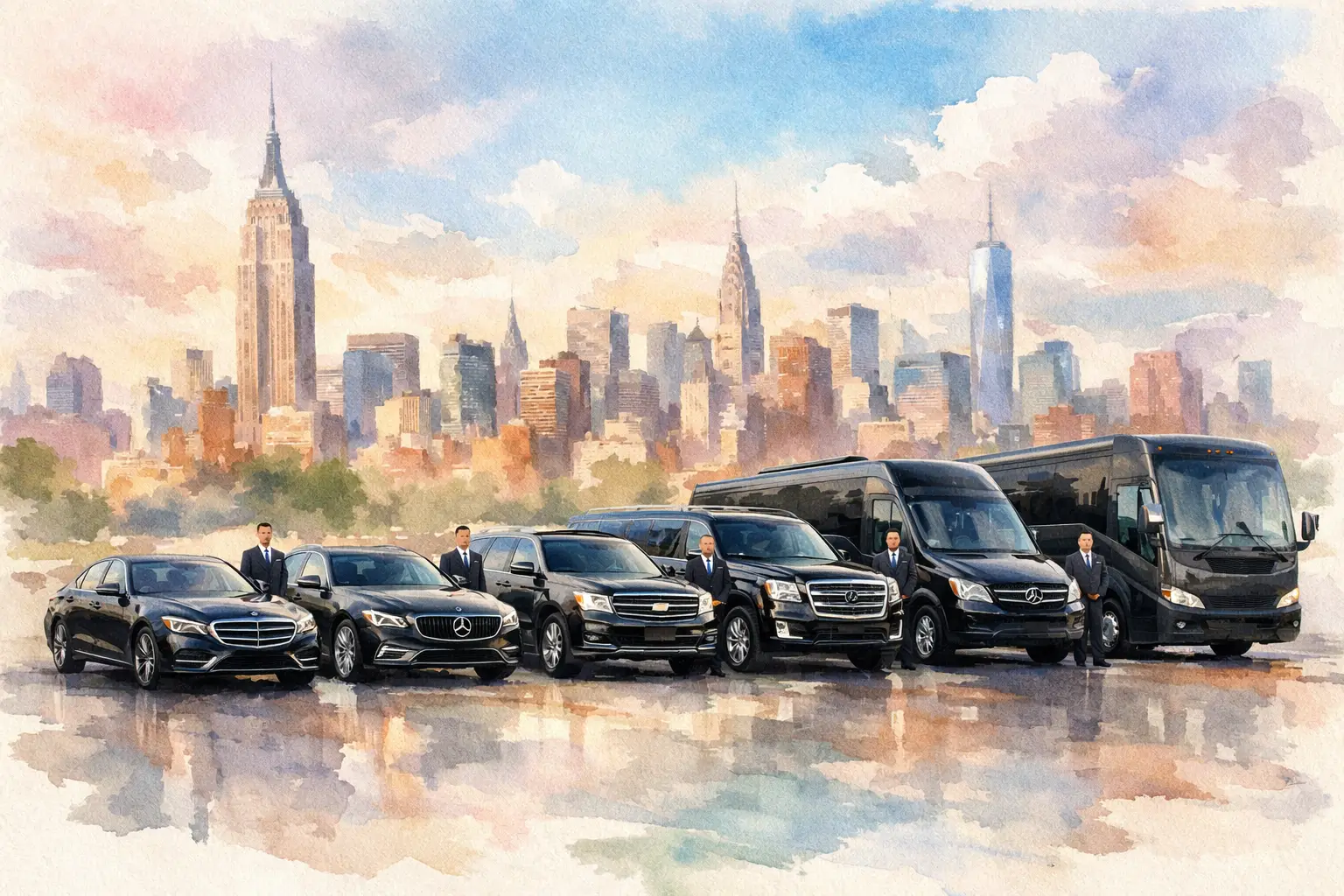
A corporate roadshow can unravel over small details: a late airport arrival, a cramped vehicle after a client presentation, or an unplanned luggage load at the final stop. The best vehicles for corporate roadshows give executives room to work, support a carefully planned schedule, and fit the actual number of passengers moving between meetings.
For New York City, Long Island, and Hamptons itineraries, vehicle selection is not only about appearance. It should account for passenger count, presentation materials, airport transfers, traffic exposure, and whether the group will travel together all day.
What a Corporate Roadshow Vehicle Must Handle
A roadshow often combines several different trip types. A team may land at JFK in the morning, meet in Midtown, continue to Long Island City, and finish at an office in Melville or Garden City. Another itinerary may begin at Teterboro and include Manhattan meetings before an evening transfer to Southampton.
The right vehicle keeps those changes manageable. It needs to offer a professional arrival, comfortable seating between stops, and enough storage for carry-ons, garment bags, sample cases, or presentation equipment. It should also be selected with the day’s route in mind. A vehicle that is ideal for two executives may be impractical for a six-person team with luggage.
Traffic is part of the planning equation. Midtown curb access, security procedures at major office towers, bridge and tunnel crossings, and seasonal congestion on the Long Island Expressway can all affect timing. A qualified chauffeur and a realistic schedule matter as much as the vehicle itself.
Best Vehicles for Corporate Roadshows by Group Size
Executive sedan for one to three travelers
A luxury sedan is the strongest choice for a principal executive, a visiting client, or a small leadership team traveling light. The Mercedes-Benz S-Class and BMW 7 Series provide a discreet, polished setting for airport pickups, investor meetings, and private dinners.
Sedans work particularly well for point-to-point roadshow days within Manhattan, such as meetings in Hudson Yards, Midtown East, the Financial District, and the United Nations area. They are easier to position at busy hotels and office entrances than larger vehicles. The trade-off is limited luggage capacity and less room for extra team members or equipment.
For an itinerary that begins with several international arrivals at JFK, a sedan is usually best reserved for a single executive. It is not the right fit when each passenger has large checked bags or when the group must remain together.
Full-size luxury SUV for three to six travelers
A Cadillac Escalade ESV, Chevrolet Suburban, GMC Yukon XL, or Lincoln Navigator L is often the most flexible choice for a small roadshow group. These vehicles offer a professional executive presence, tinted rear windows, generous legroom, and generous cargo capacity.
An SUV is practical when a managing director, assistant, and colleagues need to travel together from LaGuardia to Manhattan, then out to an afternoon meeting in Nassau County. It also suits teams carrying display materials, personal luggage, or multiple laptops and garment bags.
The main limitation is capacity. An SUV may comfortably accommodate a small group, but it should not be stretched to handle every passenger simply because the headcount appears to fit. If a team will be in the vehicle for several hours, comfort and storage space deserve more weight than maximum seating.
Executive Sprinter for six to 13 travelers
For many corporate itineraries, the Mercedes-Benz Sprinter Executive is the most practical roadshow vehicle. It allows a team to stay together, gives passengers space to enter and exit comfortably, and provides room for luggage and materials that would overwhelm an SUV.
This option works well for a sales team visiting several client offices, a financial group traveling between Manhattan and Long Island, or a delegation arriving at JFK or Newark. The higher cabin makes boarding and exiting easier during an itinerary with frequent stops. Passengers can board without repeatedly reorganizing bags or changing vehicles.
An executive Sprinter is especially useful for full-day schedules. Teams can review notes between meetings without feeling packed in, while the chauffeur handles curbside logistics and the next departure. For larger arriving groups, a New York van service can help keep the group together while accommodating flight timing, hotel departure windows, and the order of meetings.
Passenger Sprinter or executive shuttle for 12 to 28 travelers
When the roadshow includes a larger department, client group, or visiting delegation, a Mercedes-Benz Sprinter Passenger or Ford Transit Executive can be a sensible choice. For still larger groups, a Grech Motors executive shuttle provides more seating and luggage capacity while preserving a business-appropriate environment.
These vehicles are well suited to group site visits, multi-office meetings, conference transportation, and airport transfers where keeping everyone together is the priority. They can also reduce the complexity of coordinating several separate SUVs across congested city streets.
The planning detail here is luggage. A group of 20 travelers on a local meeting loop has very different needs than 20 travelers arriving at JFK with full-size suitcases. Share the expected bag count, equipment load, and any folding displays or cases before the itinerary is finalized.
Motorcoach for major delegations and multi-site programs
A Prevost H3-45 or MCI J4500 is appropriate for larger corporate groups that need coordinated transportation between venues. This may include company meetings, investor events, conferences, or a multi-day itinerary involving Manhattan, Brooklyn, Queens, and Long Island.
A motorcoach is not automatically the best option for every large group. Some Manhattan streets and hotel entrances have limited staging space. If the schedule involves frequent stops in dense areas, an executive shuttle fleet may offer more flexibility. For a longer trip to Suffolk County or a Hamptons program, however, a motorcoach can keep a large group together comfortably.
Match the Vehicle to the Roadshow Route
The vehicle should reflect where the day actually takes place. A route confined to Manhattan may favor sedans and SUVs because hotel driveways, office loading zones, and curb access can be tight. A team traveling from JFK to Midtown, then to Melville and Hauppauge, benefits from the added space of an executive Sprinter.
Hamptons roadshows need their own level of planning. Friday afternoon travel east can be slower during the summer, especially approaching Southampton, Water Mill, Bridgehampton, East Hampton, and Sag Harbor. A larger vehicle with comfortable seating becomes more valuable when the schedule includes a longer highway segment and multiple meetings.
For these programs, a Hampton van service can be a practical option for teams that need to travel together from Manhattan or the airport to a sequence of East End appointments. The itinerary should leave reasonable time for each stop rather than assuming ideal traffic conditions.
Details to Confirm Before You Reserve
A well-planned roadshow begins with a complete manifest and a clear operating schedule. Confirm the passenger count for every segment, not only the first pickup. One executive may depart early, while several colleagues may join later from another terminal or office.
Also clarify luggage, equipment, and accessibility needs. Presentation boards, product samples, golf bags for a client event, and formalwear for an evening function all affect the vehicle recommendation. If the group has a strict meeting sequence, provide building names and preferred entrances whenever possible.
At JFK, LaGuardia, and Newark, pickup timing can be affected by flight delays, gate changes, baggage collection, or terminal congestion. A transportation plan should allow the chauffeur team to adjust without forcing travelers to solve logistics after landing.
Finally, decide whether the group needs one vehicle all day or separate transfers for different teams. A dedicated vehicle and chauffeur are often the cleaner choice for a tightly scheduled executive program. Split vehicles may make more sense when participants have staggered arrivals or different final destinations.
Why Chauffeur Experience Matters on a Roadshow
Roadshows place more pressure on operations than a single airport transfer. The chauffeur must understand the timing of each departure, maintain a professional presence at every stop, and communicate clearly when traffic or venue access affects the plan.
WTM365 | U.S. Limosystems brings more than 25 years of local experience to corporate transportation across New York City, Long Island, and the Hamptons. Its licensed operations, including NYC TLC #B03334 and Port Authority Permit #AXA-170, support legal airport pickup and drop-off at JFK, LaGuardia, and Newark.
For an executive roadshow, the right answer may be a sedan, SUV, Sprinter, shuttle, or motorcoach. Start with the people, luggage, route, and meeting schedule, then choose the vehicle that gives the group enough space and the schedule enough flexibility. Share your itinerary early to arrange transportation that fits each stop with care.
