
Bethpage, NY to JFK Airport Car and Van Service
Plan a comfortable Bethpage, NY to JFK Airport car and van service with realistic timing, right-size vehicles, and licensed local chauffeurs for arrivals.
 Skip to main content
A conference itinerary can fall apart before the first session begins. A delayed airport arrival, a group split between vehicles, or an underestimated Midtown pickup can leave speakers and guests arriving stressed. Planning conference transportation NYC requires accounting for the guest count, luggage, venue access, and New York traffic patterns well before event day.
For conference transportation NYC, coordinating airport arrivals in advance helps organizers manage multiple guests and flight schedules. Executives may require private airport pickups, while attendees need coordinated transfers between a hotel, meeting venue, dinner, and airport. Matching the vehicle and schedule to each movement keeps the day organized without making transportation the center of attention.
A practical transportation plan begins with the agenda. Identify every movement that matters: airport arrivals, hotel-to-venue transfers, off-site dinners, evening receptions, and departures. Then note which trips have fixed start times and which need flexibility.
A 9:00 a.m. Manhattan meeting requires a different approach than a dinner in Southampton. Midtown traffic can change quickly around major venues, construction, and weekday rush periods. On Long Island, travel between Garden City, Melville, Hauppauge, and Suffolk County may be straightforward, but a large group still needs enough boarding time to leave together.
Ask a few operational questions before choosing vehicles:
These details determine whether a private sedan, SUV, Sprinter, executive shuttle, or larger coach is the sensible choice.
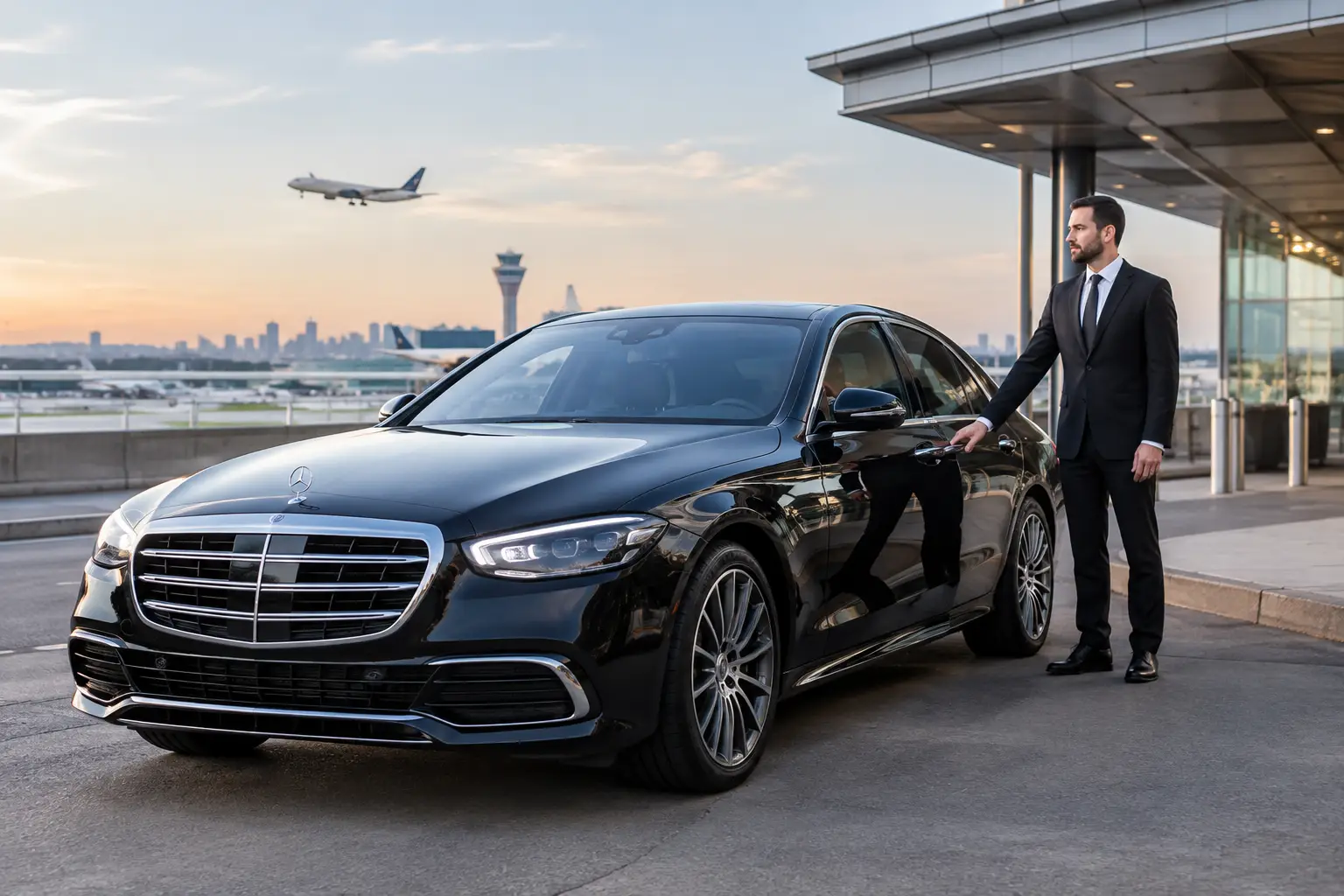
A luxury sedan is often the clearest choice for one or two executives, keynote speakers, or visiting clients. It provides a quiet, private setting between JFK and a Manhattan office, or from Teterboro to a meeting near Hudson Yards, the United Nations, or the Financial District.
This option works well when schedules are individual and discretion matters. It is less efficient for several guests arriving within the same window. In that case, separate sedans may create unnecessary coordination, especially if everyone needs to reach the same venue together.
For small executive teams, an SUV offers more flexibility than a sedan. It is a practical fit for three to six passengers, depending on luggage, and works particularly well for airport arrivals or site visits across Manhattan, Queens, Brooklyn, and Long Island.
SUVs are also useful when attendees are carrying garment bags, trade-show materials, or multiple suitcases. A group of four arriving at JFK after an international flight may prefer the additional room. For late-night arrivals, a prearranged JFK Van Service or private SUV transfer also provides a clear pickup plan when travelers may be tired and unfamiliar with the airport.
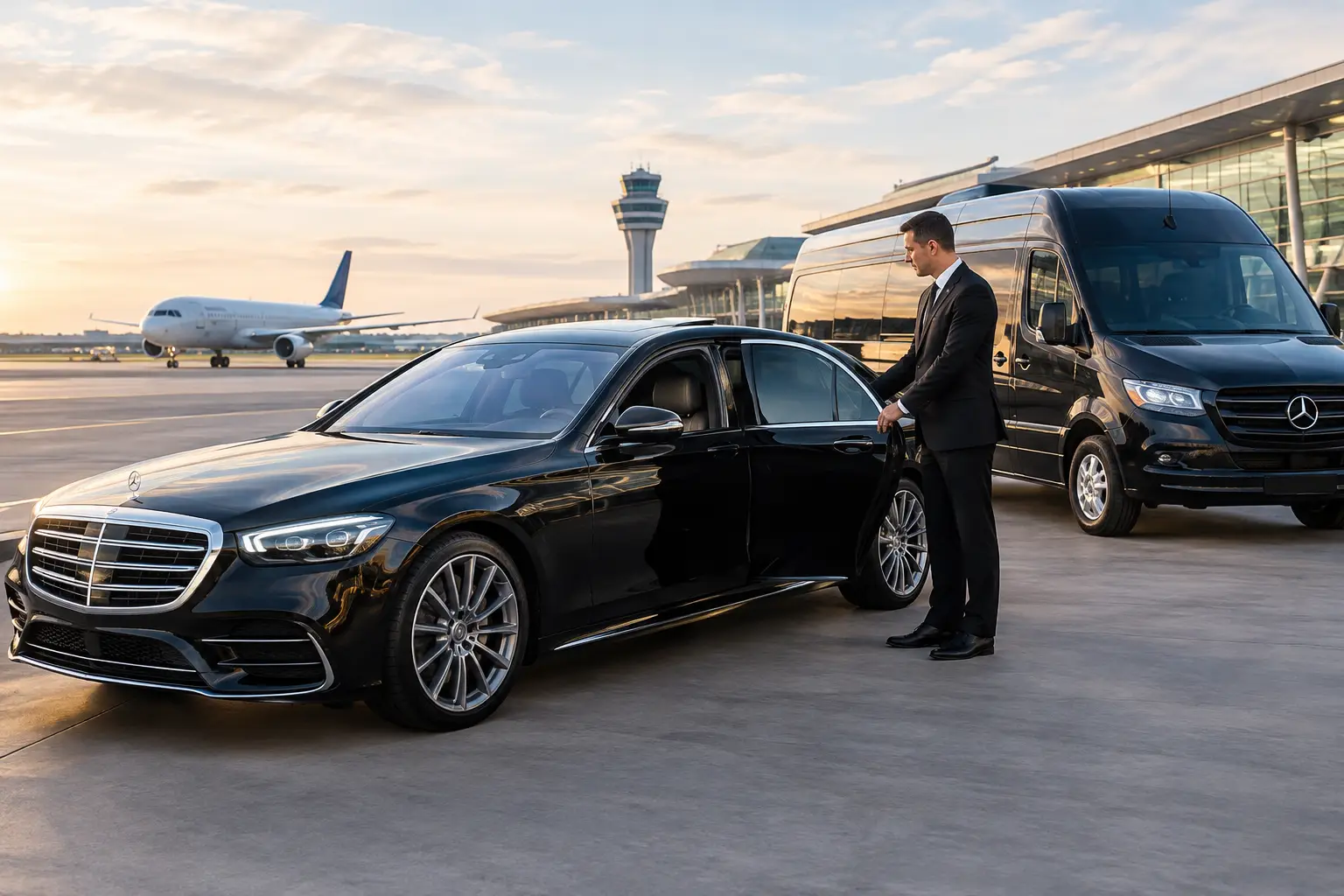
Executive and passenger Sprinter vans are among the most useful conference vehicles for groups that need to travel together. They suit airport teams, board members, wedding-adjacent conference events, and groups moving from a Manhattan hotel to a Brooklyn venue or Nassau County dinner.
The advantage is not only capacity. Keeping a group in one vehicle reduces missed departures, duplicate directions, and confusion over venue entrances. Sprinters are especially effective for groups of six to 14, depending on the vehicle configuration and luggage requirements.
For example, a team arriving at LaGuardia for a conference at a Long Island City hotel may use a Sprinter for a consolidated pickup. A company hosting guests in Southampton can use a Hampton Van Service for transfers between hotels, private estates, restaurants, and event venues in Bridgehampton, Sag Harbor, or East Hampton.
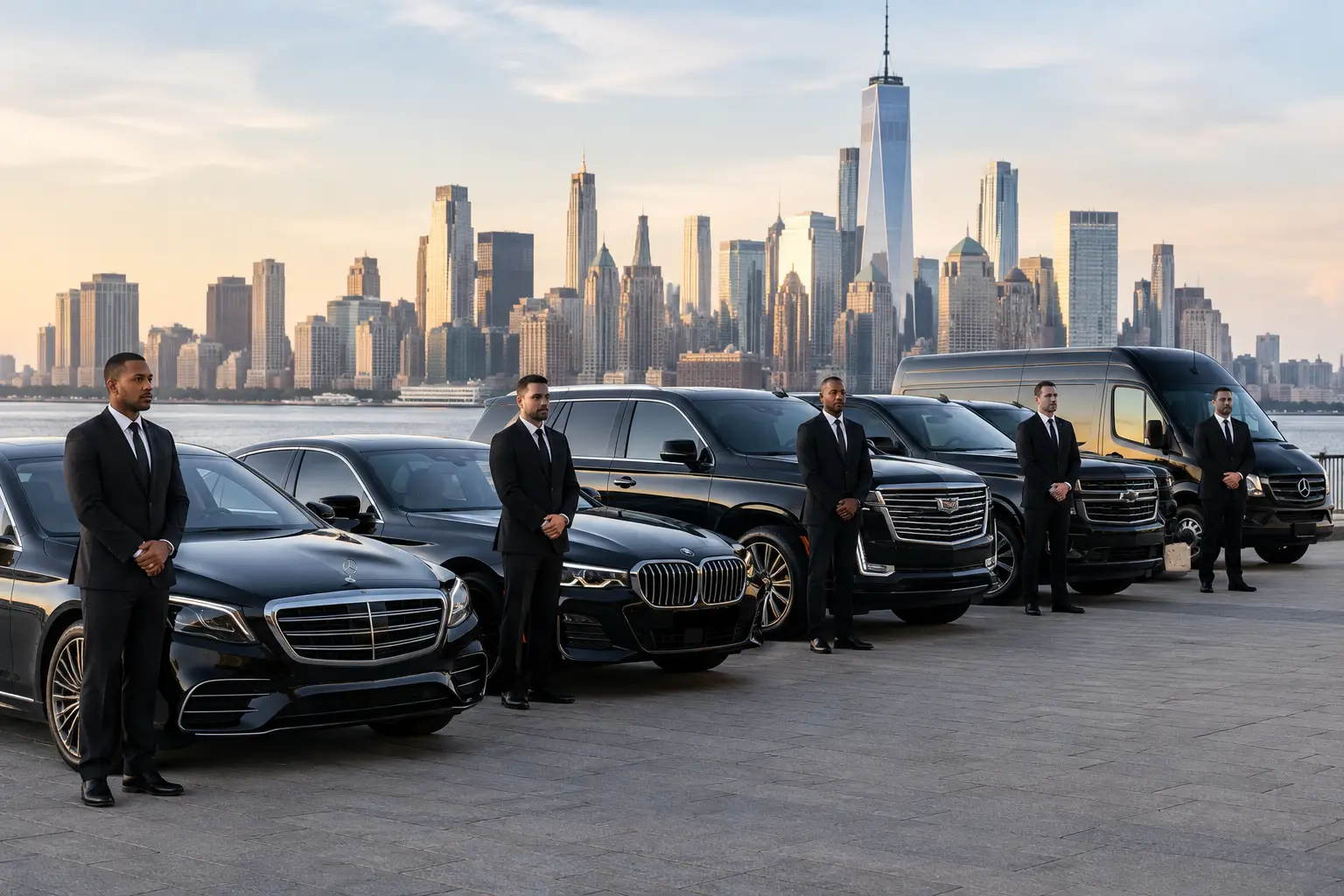
When a conference requires transportation for dozens of attendees at once, an executive shuttle or full-size coach may be the better fit. This is common for conventions, company meetings, university events, and wedding groups with a formal transportation schedule.
Larger vehicles work best on repeated, timed routes. Think hotel-to-venue morning departures, a midday transfer to an off-site lunch, or a return movement after an evening reception. They need careful staging, however. A tight Manhattan curbside location may not accommodate a large vehicle for extended waiting, while a Hamptons venue may require a different approach during peak summer weekends.
Airport transportation is often the first impression of a conference, so it should not be treated as an afterthought. JFK, LaGuardia, and Newark each have different traffic patterns, terminal layouts, and pickup procedures. Arrival times can also shift, which is why flight monitoring and clear passenger instructions matter.
For conferences with multiple arrivals, group guests by terminal, arrival window, and destination. Someone landing at JFK at 6:30 a.m. for a Midtown breakfast does not need the same vehicle timing as a team arriving at Newark for an afternoon event in Lower Manhattan.
Allow realistic travel time between the airport and the venue. A trip from JFK to Midtown can be quick at certain hours and much slower during weekday congestion. Newark to Manhattan involves river crossings and can be affected by traffic near the approaches. For a time-sensitive presentation, build in a sensible buffer rather than scheduling the arrival to the minute.
A licensed provider also matters at airport locations. WTM365 | U.S. Limosystems operates under NYC TLC #B03334 and Port Authority Permit #AXA-170, with authorized passenger pickup and drop-off at JFK, LaGuardia, and Newark. Those credentials support orderly airport coordination, particularly for travelers who need a professional arrival process.
When planning conference transportation NYC, organizers need to account for traffic conditions that vary by location and time of day. A transfer from Midtown to the Javits Center is different from a trip from Wall Street to a dinner in Williamsburg. A Friday afternoon drive from Manhattan to the Hamptons is not comparable to a Tuesday morning departure.
For Manhattan events, avoid assuming that nearby addresses mean a fast drive. Street closures, loading restrictions, and major events can affect even short routes. Provide the transportation team with the precise entrance, not just the venue name. Many hotels and conference centers use separate doors for guest arrivals, loading, and private events.
For Hamptons conferences, seasonal demand requires earlier planning. Summer Fridays, holiday weekends, and major events can extend travel times between New York City and the Hamptons. If the program begins at a fixed hour, schedule the group departure with room for traffic rather than asking guests to rush.
Weather deserves the same practical attention. Heavy rain, winter conditions, and reduced visibility can slow airport operations and road travel. A good plan has a point person who can make decisions if the schedule needs to adjust.
Even a well-designed schedule can become difficult if several people are changing pickups independently. Assign one conference coordinator to confirm the manifest, arrival details, venue contacts, and any last-minute updates. That person should know who is traveling in each vehicle and how to reach key guests. A single point of contact makes conference transportation NYC easier to coordinate when schedules change.
For large events, share a simple transportation brief with attendees before travel day. Include the pickup time, pickup location, vehicle type, event contact, and the venue entrance. Clear instructions are especially helpful for out-of-town conference attendees arriving late at night or traveling from an airport to their hotel.
The coordinator should also distinguish between must-arrive-together groups and flexible travelers. Speakers, hosts, and client delegations may need dedicated service. General attendees may be better served through scheduled group departures. This approach protects the most time-sensitive parts of the program without overcomplicating every trip.
The right vehicle is not always the largest one or the most elaborate one. It is the option that fits the group, luggage, route, and schedule. A sedan may be ideal for a visiting executive. A Sprinter may be the practical choice for a leadership team. An executive shuttle may be essential when 50 conference attendees must reach the same venue on schedule.
With more than 25 years of local experience, a professional chauffeured transportation provider can help organizers account for the details that affect the day: airport timing, hotel entrances, traffic patterns, and group movements. Share your conference itinerary early, and the transportation plan can support a composed arrival, a punctual program, and a more comfortable trip home.

 Optimized by Seraphinite Accelerator